Technology

Why Google Chrome?

By now you've heard of Google's new Chrome browser which is currently in beta.  But did you ask yourself, why would Google want to enter the Internet browser market?  There are a number of reasons to why Google may have developed this browser, but I believe the explanation given by an article posted at CNET's Webware is the most likely reason.

On the Web, a site that responds a few milliseconds faster can make a big difference in people's engagement. It's for this reason that Google believes its new Web browser, Chrome, is a project worth investing in rather than a footnote in the history of the Internet.

Chrome, Google said during its Tuesday launch event, is much faster at showing Web pages than the most widely used browser, Microsoft's Internet Explorer. Google's hope is that performance will open up the bottleneck that chokes the speed and abilities of today's Web-based applications...

...Why speed means money
Google benefits materially from fast performance. First, when it comes to search, Google discovered when its search page loads fractionally faster, users search more often, which of course leads to more opportunities for Google to place its highly lucrative text ads. Second, a faster Web application foundation means that Google's online applications for e-mail, word processing, spreadsheets, and calendars can become faster and fuller-featured.
15 great turning points in tech history

ComputerWorld has put together one of the greatest # Best lists I've seen in a long time.  Check out 15 great turning points in tech history.

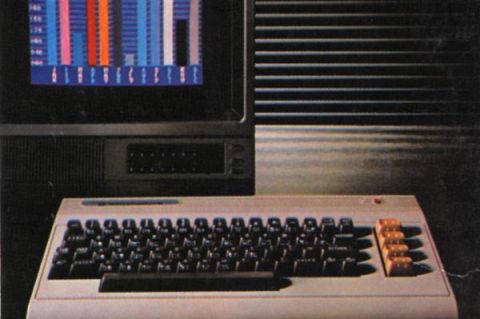
In every industry there are key milestones that mark a change in the course of history, and the fast-moving technology field has more than its share. Presented here are 15 turning points that shaped the computing world as we know it today, including some that still continue to influence its direction for years to come.

Microsoft reverses IE8 compatibility decision

On Monday, Microsoft announced from their IEBlog that they were reversing their decision for how Internet Explorer 8 would be compatible with Web pages designed for Internet Explorer 7 as well as Internet standards. You may recall that earlier this year Microsoft announced that Internet Explorer 8 in "Standards Mode" would actually be rendering pages in Internet Explorer 7's "Standards Mode". If you really wanted to have IE8 follow the latest standards then you would need to insert a special tag to your pages.

Walt Mossberg on the Asus Eee PC

In Thursday morning's Wall Street Journal, Walt Mossberg did a review of the Asus Eee PC. The article, Asus Offers Travelers Small, Mobile Eee PC, but It’s Too Cramped, can be found in his column archive (a Wordpress site). I had been waiting for someone of his stature do a review on this product, but I was a little disappointed to see yet another review of a non-Apple device (this one is Linux based) be so negative.

The Mac and Windows Alternative: My Linux Laptop

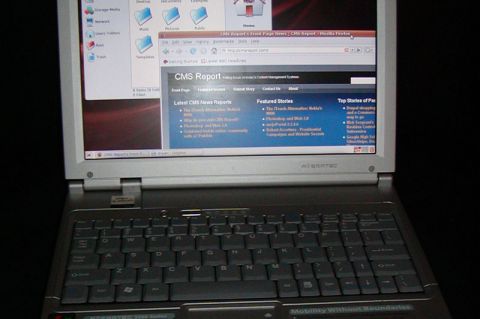
A few weeks ago, I seriously thought about buying either Apple's latest MacBook or a Windows laptop where I could dual boot between the laptops native operating systems and Linux. In the end, I chose to install Linux on a three year old laptop. This old laptop isn't just any laptop but one of the first sub-$1000 laptops that hit the United States market. The laptop is the Averatec 3220 and over time I've found it just too sluggish for running Windows XP.

This old Averatec 3220 had a lot of negatives going its way for installing Linux. The laptop is from a company that almost no one knows so support was limited. Even Google had a tough time helping me find "best practices" for installing Linux on this particular laptop model. This particular laptop includes an AMD Athlon XP-M 2000+ processor, 512 MB RAM (upgraded from the original 256 MB), a 12.1 inch screen, and both Ethernet and wireless networking capabilities. The laptop could barely be considered "up to date" with regards to hardware, although its exterior is designed well and doesn't look dated like other laptops of the same age.

Before I discuss my troubles with installing Linux on this laptop, let me first talk about the positives. During the past two weeks, using Linux on this laptop has been pure joy.

The iTouch Alternative: Nokia's N800

Rich Hoeg, eContent, purchased himself the Nokia N800. The N800 is a linux based handheld Internet tablet with functions similar to those of Apple's iTouch. I'm not sure either device is for me, but I've been in a little bit of an anti-Apple and anti-Windows funk lately...that I felt it worth mentioning here. Rich Hoeg has this to say about the N800:

I've created a short screencast
which demonstrates many of the features found upon the Nokia N800. However, here are a few of the reasons I chose the Nokia over the iPod Touch:

KDE 4.0 on my next laptop?

The latest review I've read on the KDE desktop is from Ars Technica, A first look at KDE 4.0 release candidate 2. While the author notes that a lot of improvements still need to be made to KDE 4.0, overall it should be an impressive desktop. I'm contemplating that my next laptop will be fully Linux and hoping KDE 4.0 will bring enough Wow to impress others on why I didn't choose to go the Windows or Mac route.

I have lost my Wow

Last week, I mentioned that Mozilla is planning to give the Firefox browser a makeover.  Alex Faaborg had mentioned that they plan to integrate the look of Firefox with Microsoft's Windows Vista and Apple's Mac OS X.  The problem was Alex had failed to mention anything about the Linux operating system.  Linux users, of course, then replied by comment that they were unhappy that there was no mention of Linux in the post.