Cloud

Moving to the Cloud? Take a Deep Dive for Full Benefit

It’s likely clear to most companies by now that any realistic view of the future of the business world involves cloud computing in some way. It’s difficult to ignore the variety of benefits that come from adopting the cloud, including more productivity from employees, more business agility, and, of course, significant cost savings. Even with these advantages in mind, many companies still feel a reluctance to make the cloud part of their operations. A move to the cloud is certainly a significant change, one which should not be considered lightly.

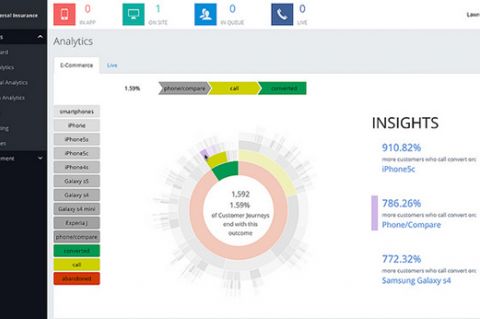
Altocloud Receives $2 Million Funding and Launches Predictive Communications Platform for Online Sales

The year is still young, but it is already a busy one for software startup, Altocloud. The Mountain View, California company just announced $2 million seed funding and the commercial availability of its predictive communications platform for customer sales and engagement. The funding, led by Delta Partners, Digicel Group and ACT Venture Capital, brings Altocloud’s total funding to $3 million. Altocloud's new platform intelligently identifies the optimal online visitors and delivers tailored chat, voice, video and content so customers get the information and help they need at exactly the right moment.  

Business Agility and SaaS for Small and Mid-sized Businesses

On-premises software is business management software that is installed on the servers and/or computers within the physical facilities of individual businesses. Until 2005, the deployment and use of business software was almost exclusively done on premises. However, the inception of off-premises software known as “software as a service” created an alternative of running business management software from remote facilities connected to business networks through cloud computing such as those offered by Dell.

Five Key IT Security Trends For 2015

Ian Kilpatrick, chairman Wick Hill Group, specialists in secure IP infrastructure solutions, looks at five key IT security trends and solutions for 2015:

1. Rise in security breaches

The current high level of security breaches, from the largest organization down to the smallest, will continue unabated. What will also grow in 2015 will be the acceptance that security breaches are pretty well unavoidable for the majority of organizations. Companies will need to change their approach to security in order to reflect this. Security spending will continue to increase, with spending growth higher on asset security over perimeter security.

Arc Productions Deploys Avere Systems to Boost Creativity of its Artists

Avere FXT Series Helps Studio Deliver Maximum System Uptime

PITTSBURGH, PA - December 2, 2014 - Avere Systems, a leading provider of enterprise storage for the hybrid cloud, today announced that Arc Productions, one of Canada's largest animation studios, uses Avere FXT Edge filers to support its artists on a full production pipeline of theatrical features, television series, DVDs and shorts.

Faced with heavy rendering loads that impacted responsiveness to artist workstations, Arc Productions needed to provide a high-performance, reliable and flexible infrastructure that kept toolsets and artists working, without increasing costs or missing deadlines.

The Weather Channel is using Drupal and Acquia Platform

When I talk about Drupal, information technology and the weather all in the same breath, I'm known to be very enthusiastic and opinionated in such discussions. I can't help myself. I'm biased toward Drupal as it is one of my favorite content management systems. I'm also a former meteorologist working in information technology for a very large organization that is heavily involved with the weather. Needless to say, a year or two ago when I heard that The Weather Channel started using Drupal to meet the needs of it's customers and meteorologists, it caught my attention.

Examining the Two Most Touted Benefits of BYOD

Bring your own device (BYOD) may not exactly be new, but many companies are still trying to figure out if it’s the right move for them. While roughly half of all organizations have instituted some kind of BYOD policy, that still leaves the same number looking at their options and wondering if allowing employees to use their own devices for work is really worth it. There are many reasons BYOD may be adopted, but the two biggest benefits cited by BYOD supporters are the increases in employee productivity and overall job satisfaction. But do employees who use their own devices actually get more work done, and does it also make them happier while on the job?