Drupal Open App Standard Initiative Launched
Leading Drupal Firms Announce Initiative to Drive Consumer-Friendly Drupal App Development
JFBConnect v3.2 - Adds Multiple Features for Enhanced Integration of Joomla and Facebook
With Facebook recently announcing it surpassed the 500 million user mark, and Joomla powering over 2.5% of all websites, the integration of both is a natural fit for growing your site and brand both easily and organically.
The newest release of JFBConnect, version 3.2, now makes that integration even more powerful! Updated features include a rich wall posting feature on registration and login, full Facebook Open Graph support, automatic comments and like boxes throughout your Joomla site, and additional profile fields during registration.
These enhancements are all in addition to existing features such as one-click registration, customizable profile import into multiple 3rd party extensions, automatic logging in of Facebook users, and all of the Facebook social widgets such as Like, Comments, Fanbox and more.
Rich Wall Posts
With rich wall posts during registration or login, you're sure to get noticed by Facebook users! Simply fill out the message, image, and link to post when any user registers or logs in and JFBConnect takes care of the rest.
Open Graph Support
Review of Drupal's Building Blocks

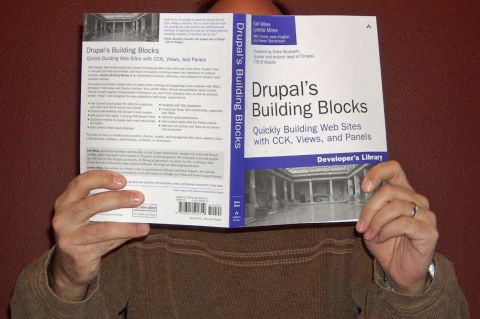
A couple weeks ago my family spent some vacation time at Disney World in Orlando, Florida. If you have ever been to a Disney theme park then you know full well that it takes a lot of work in those parks just to have fun. Some of the most popular rides in these parks have waiting periods of up to two hours due to the long lines of people wanting to get on board. Luckily, my wife brought a Disney tourist guidebook that gave our family the helpful hints, recommendations, and information we needed to beat those long lines. In the end, we ended up with a very enjoyable trip (so enjoyable that we got to ride Space Mountain twice!). That travel guide was a valuable asset to my family's vacation.
 Mastering Drupal is very similar to visiting a theme park as it takes some effort on your part to ensure you get rewarded for your effort. If Drupal is the amusement park then consider Drupal's modules as the park's attractions you're wanting to ride. With this line of thinking, I easily recommend that you let Earl and Lynette Miles' book, Drupal's Building Blocks, be your valuable tourist guide into the wonderful world of Drupal. I only review a few books each year and this is a book I gladly invested my time reading.
Drupal's Building Blocks is a tutorial, reference, and cookbook for some of Drupal's most valuable modules including CCK (Content Construction Kit), Views, and Panels. The primary purpose of this book is to give you the quickest route to mastering the modules as quickly as you can in order to help you create more powerful, flexible, usable, and manageable Web sites. The audience for this book isn't only for Web developers or designers, but also site administrators, content architects, and consultants. There is some code in this book, but what is there isn't the scary code you often find in a developer's library.
Although I've worked with Drupal for more than half a decade, I am still among the newbies who struggle with how best to use Drupal's contributed modules. I've built several sites using CCK and Views but I've always ran into hurdles that keep me from fully discovering what these modules can do for me and my sites. This book will provide you the information you need to realize the full potential of these modules. Anybody who has seen Drupal, CCK, Views, and Panels mature over the years can't help but read this book and enjoy not only the author's technical expertise but also the author's cultural and historical understanding for how the module came to be in Drupal.
In the first chapter of the book, "Introducing CCK and Nodes", there is a section titled "Quest for the Grail: How CCK Was Born". This section alone reads like an adventure story that starts by talking about the challenges site administrators originally had with Drupal needing to acquire development skills just to control the form content would take in Drupal. The story continues with Drupal 4.4 and how a contributed module named Flexinode gave non-developers the ability to create new content types yet limitations remained. I was reminded that with Drupal 4.7 CCK became Flexinode's replacement and with each successive release of Drupal the module continues to improve. For someone like me who started with Drupal 4.6 and watched Drupal 5, 6, and now 7 evolve this book spoke to my inner geek. I simply found this book to be good bridge to the more technical aspects of CCK, Views and Panels.
David Bobzien: WordPress Analytics Video
David Bobzien: WordPress Analytics: What You’re Doing Doesn’t Measure Up via WordPressTV for WordCamp Las Vegas 2010.
Sheri Bigelow: How to Support WordPress Video
Sheri Bigelow, Happiness Engineer at Automattic, gives tips on providing technical user support to WordPress bloggers. Her tips easily can crossover to other customer support tasks in the information technology field.
DrupalCon - San Francisco 2010
Drupal's "premier conference" is quickly approaching. This Drupal conference is known as DrupalCon and will be held in San Francisco from April 19-21, 2010. As with previous years, the unofficial theme of the conference is to "learn about all things Drupal". If the conference sessions aren't enough, the schedule is also packed with plenty of development, documentation, and training events that are being held the days prior to and following the conference.
Presently over 1500 people have signed up to attend the conference. The price of attending a DrupalCon has always been reasonably priced which is one of the reasons this conference always sees a high turnout rate. If you plan on attending the conference, I would urge you to buy your tickets to DrupalCon now. Procrastinators like me have been known to wait too long to register for this conference only to find out that the maximum number of available tickets for the conference has already been reached.
Also, CMS Report is proud to be a media sponsor for DrupalCon - San Francisco 2010. This is our first time we have sponsored a DrupalCon event and we're excited to be helping out by promoting this event. While you can learn quite a bit about Drupal at this conference, the conference also gives you a chance to see and hear directly from the the open source community that is supporting Drupal. As a user of Drupal, it's not just about the software that sparks our interest in DrupalCon but also the people in Drupal's community we have come to know and appreciate.

Drupal themes go nuclear with Fusion
For 40 years, scientists have searched for a way to bring nuclear fusion to the masses. If successful in bringing fusion online, we all could have an inexhaustible form of power to meet our world's energy needs. The promise of fusion is a dream that many have hoped to see become a reality in their lifetime.
Perhaps not for as noble of cause, Drupal users have sought better themes for their Drupal sites. Four years ago, it seemed to me that creating a good theme for Drupal was almost done as an afterthought. There simply were not too many places for a user to go for a quality Drupal theme. I recall spending a lot of wasted time maintaining my own (boring) themes for Drupal sites. The Drupal days of version 4.4, 4.5, 4.6 and even 4.7 for themes were dark days indeed. Luckily, Drupal 5 introduced us to a new theme called Garland. Garland may not have been a perfect theme but in my opinion the theme marked the beginning of an era for a new style of Drupal themes.
In the past few years, the number of Drupal themes provided under open source or via private companies have exploded. Along with that explosion, various starter and base themes have been introduced too. On the top of my head I can think of Zen, Genesis, Basic, and AdaptiveTheme. These starter/base themes offer theme developers opportunities for everyone to build or use professional sub-themes. In fact, this site used Zen in the theme's early years and today we're currently using a Genesis based theme called Extreme Updates (slightly modified). With each passing year, the theme offerings for Drupal has steadily improved in quality and quantity. This year is no exception and brings us a new official base theme to carry us over into the next generation of themes made for Drupal.
 The year 2010 brings us Drupal's newest base theme, Fusion. Currently, there probably isn't a Drupal theme that offers site owners more control over layout and style than a Fusion based theme. Fusion has the support and backing of well-known Drupal theme shop, TopNotchThemes. TopNotchThemes appear to be serious enough about Fusion revolutionizing the way themes are done in Drupal. This week they publicly announced their new line of themes and a website called Fusion Drupal Themes. Most of the themes offered at the site are for a price, but there are a couple free themes also being offered that should give you a chance to see what Fusion is all about.
WordPress and HTML 5 Video
Rob Larsen shows you how to create cross-browser, HTML5 enhanced WordPress themes using nothing more than a little extra JavaScript, basic WordPress knowledge and some knowledge of the new elements.
Drupal's Ubercart forks into Drupal Commerce
A few years ago, I had developed an online store for a buddy of mine using osCommerce. I had hoped to use Joomla! or Drupal for the site but at the time wasn't satisfied with the shopping cart extensions or modules that were available for either CMS. Shortly after developing that site a new eCommerce module for Drupal became available called Ubercart. I've never had taken on the task of building another online store (it was a lot of work) but I've always kept my eye on Ubercart just to stay informed.
Using the Extreme Updates theme for Drupal
If you've visited CMS Report lately, you likely noticed that we're sporting a new look and feel. Over the years, I've used various Drupal themes and many of those themes were made available for free at Drupal.org. For the past couple years, I used RoopleTheme's LiteJazz. LiteJazz spoiled me. The theme was so well designed that I don't recall having to do the usual hacks to the templates or CSS styles to make it a good fit for CMSReport.com. Thanks RoopleTheme!
Today, I'm using the Extreme Updates. The free theme is designed by Template World and ported to Drupal by 3rdWorld. In my opinion, the Extreme Updates theme has a few flaws in its design that I'm needing to fix. You'll have to be patient with me because I'm not much of a designer. Luckily, the theme utilizes the impressive Genesis package, a start theme for Drupal 6. This is the very first time I've used a Genesis theme but I'm just as impressed with Genesis as I was when I first used Zen, another starter theme for Drupal.
This time around when considering a new theme, I also did something I've never done before. I considered spending money for a theme. In the past, CMSReport.com has never generated the revenue I needed to justify hiring a Drupal service company to design a theme for my site. However, something interesting has happened in the Drupal community, a number of design companies have started to design and sell themes geared toward the smaller Drupal sites like mine.
The availability of quality themes by such companies as community favorite TopNotchThemes shows just how much the Drupal ecosystem has matured over the years. Doesn't it seem just like yesterday when the biggest complaint about Drupal was that there were no good themes available? The future for Drupal theme development looks very bright. My understanding is that there are a number of changes in Drupal 7 that will make the web designers very happy. Honestly, I wouldn't be surprised to see in 2010 the quantity of available Drupal themes reach toward the same numbers that we've seen for Wordpress and Joomla!.
Changing to a new theme also marks the beginning of my desire to move CMSReport.com into some new directions. I want this site to have a more professional and community feel to it. I'm personally tired of reading mostly my own posts here and I think it's time to get a lot more author's involved. These changes will be progressive over the coming months, but won't be settled until the arrival of Drupal 7. As has been since Drupal 4.6, I've always geared the features in my sites to allow for a quick upgrade to the latest version of Drupal. Similar to the past, you just might see this site running a beta or release candidate of Drupal 7 by the end of the year.